
Why Every Business Needs a Strong Content Marketing Strategy Today
In today’s competitive digital landscape, simply having a website or posting on social media isn’t enough. Customers expect businesses to provide valuable, educational, and engaging content before making purchasing decisions. That’s why content marketing has become one of the most effective ways to build trust, improve search engine rankings, generate qualified leads, and increase revenue.
Whether you’re a startup, small business, or enterprise, a well-planned content marketing strategy helps you consistently deliver the right message to the right audience at the right time.
In this guide, you’ll learn everything you need to know about content marketing, how to build a successful strategy, common mistakes to avoid, and how Ishape Technologies Ltd can help your business succeed.

Understanding Content Marketing
What is Content Marketing?
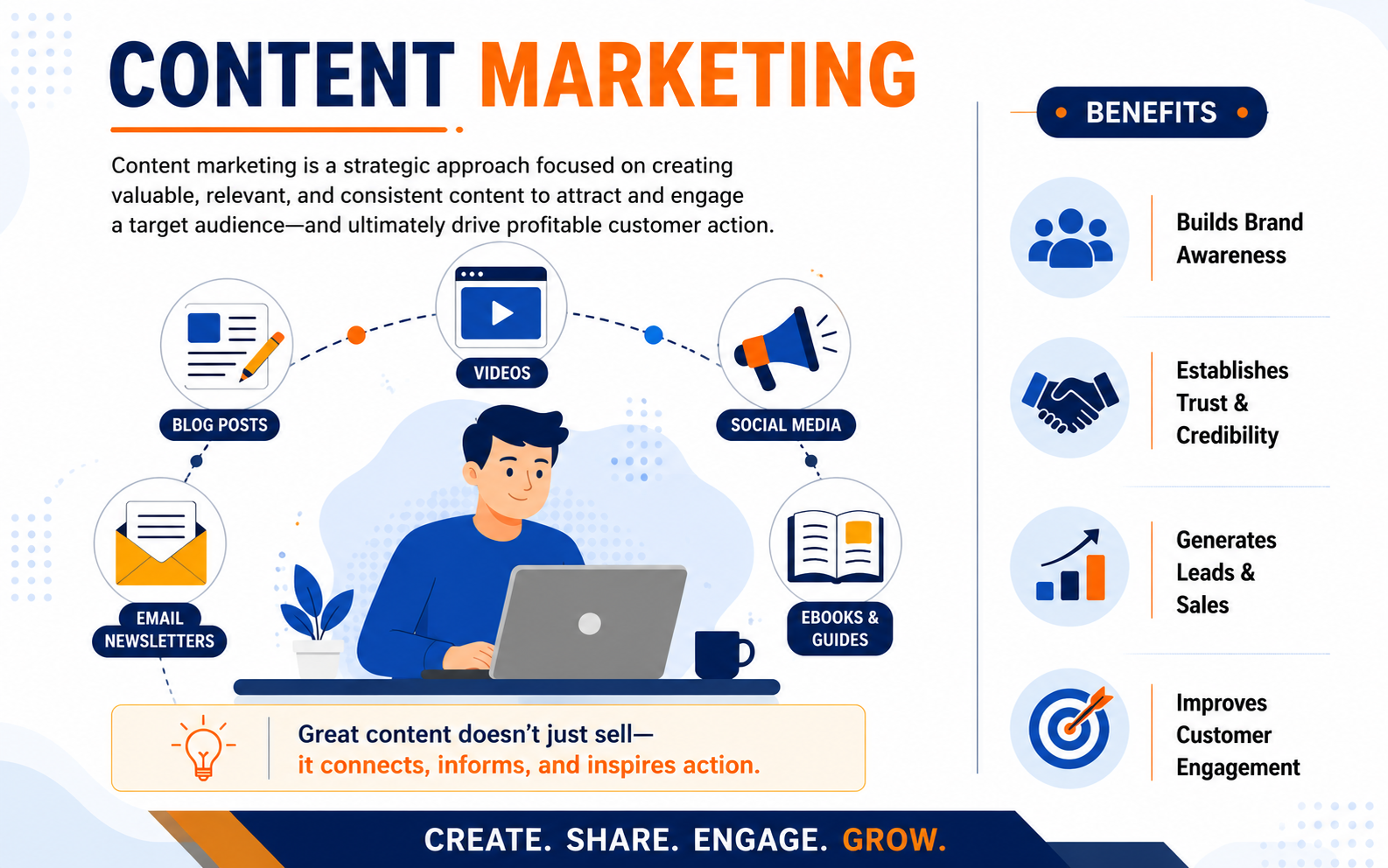
Content marketing is a strategic marketing approach focused on creating, publishing, and distributing valuable, relevant, and consistent content to attract and retain a clearly defined audience.
Instead of directly promoting products or services, content marketing educates potential customers, answers their questions, solves their problems, and builds long-term trust.
Examples include:
- Blog articles
- Videos
- Social media posts
- Email newsletters
- Infographics
- Case studies
- Whitepapers
- Podcasts
- Webinars
- E-books
The ultimate goal is to convert readers into loyal customers through helpful information rather than traditional advertising.

Why Content Marketing Matters in Today’s Digital World
Modern consumers research extensively before making buying decisions. Search engines prioritize websites that consistently publish valuable content.
A successful content marketing strategy helps businesses:
- Increase website traffic
- Improve Google rankings
- Build brand authority
- Generate high-quality leads
- Increase customer engagement
- Improve customer retention
- Lower customer acquisition costs
- Support long-term business growth
Companies that invest in quality content often experience stronger customer relationships and better ROI than those relying solely on paid advertising.
Content Marketing Strategy vs Content Strategy vs Content Plan
These terms are often used interchangeably, but they serve different purposes.
| Content Marketing Strategy | Content Strategy | Content Plan |
|---|---|---|
| Defines why content is created | Defines how content is managed | Defines when content is published |
| Focuses on business goals | Focuses on governance and organization | Focuses on execution |
| Audience-first approach | Content lifecycle management | Publishing schedule |
| Long-term vision | Operational framework | Daily and weekly tasks |
A successful business needs all three working together.
The 7-Step Content Marketing Strategy Framework
Step 1: Establish Clear Business Objectives
Every successful strategy begins with clear goals.
Examples include:
- Increase organic traffic
- Generate more leads
- Improve conversion rates
- Build brand awareness
- Increase online sales
- Improve customer retention
Without measurable goals, it’s impossible to evaluate success.
Step 2: Know Your Target Audience
Creating content without understanding your audience is like writing a book nobody wants to read.
Build customer personas by identifying:
- Age
- Location
- Occupation
- Income
- Pain points
- Goals
- Buying behavior
- Preferred content formats
Understanding your audience allows you to create personalized experiences that increase engagement.
Step 3: Perform Content Research
Research helps identify what your audience is searching for.
Focus on:
- Keyword research
- Competitor analysis
- Trending topics
- Customer questions
- Industry news
- Search intent
Creating content around user intent dramatically improves SEO performance.
Step 4: Choose the Right Content Formats
Different audiences consume content differently.
Popular formats include:
Blog Articles
Perfect for:
- SEO
- Educational content
- Lead generation
Videos
Ideal for:
- Product demonstrations
- Tutorials
- Brand storytelling
Infographics
Best for simplifying complex information.
Case Studies
Excellent for building trust through real-world success stories.
Email Marketing
Keeps customers engaged and nurtures leads.
Social Media
Drives awareness and community engagement.
Step 5: Create High-Quality Content
Great content should be:
- Helpful
- Accurate
- Original
- Easy to read
- Well-structured
- SEO optimized
- Visually appealing
Always prioritize solving customer problems rather than promoting products.
Step 6: Publish and Promote Content
Publishing content is only half the job.
Promote your content through:
- Social media
- Email campaigns
- Guest blogging
- Influencer partnerships
- Online communities
- Paid advertising
- Internal linking
Repurpose content into multiple formats to maximize reach.
Step 7: Measure and Improve
Monitor performance regularly using analytics.
Track:
- Organic traffic
- Keyword rankings
- Bounce rate
- Average session duration
- Lead generation
- Conversion rate
- Social engagement
- Backlinks
Use insights to continuously refine your strategy.
Key Components of a Strong Content Marketing Strategy
Audience Research
Understanding customer needs is the foundation of every successful campaign.
Keyword Strategy
Target keywords with:
- High search volume
- Relevant search intent
- Moderate competition
Include both short-tail and long-tail keywords.
Content Calendar
Plan content in advance to maintain consistency.
Project management platforms like:
- Asana
- Trello
help marketing teams organize workflows, assign tasks, and meet publishing deadlines.
SEO Optimization
Optimize every piece of content with:
- Proper headings
- Internal links
- Meta titles
- Meta descriptions
- Image optimization
- Mobile responsiveness
- Fast loading speed
Distribution Strategy
Create once.
Promote everywhere.
Share content across:
- X (Twitter)
- Email newsletters
- YouTube
- Industry forums
Content Creation Best Practices
To maximize results:
Write for Humans First
Avoid keyword stuffing.
Focus on solving problems naturally.
Use Clear Headlines
Strong headlines improve click-through rates.
Add Visual Elements
Include:
- Images
- Charts
- Videos
- Icons
- Screenshots
Visual content increases engagement significantly.
Keep Content Updated
Refresh older articles regularly.
Search engines favor updated information.
Include Clear Calls-to-Action
Guide readers toward:
- Contact forms
- Consultations
- Product pages
- Newsletter subscriptions
Content Marketing Strategy Example
Imagine a software company selling CRM solutions.
Instead of running only paid advertisements, they create:
- Beginner CRM guides
- Customer success stories
- Product tutorials
- Industry reports
- Comparison articles
- Free templates
Visitors discover these resources through Google, gain trust in the brand, and eventually become paying customers.
This is content marketing in action.
Examples of Successful Content Marketing
HubSpot
HubSpot built one of the world’s largest marketing blogs by consistently publishing educational content.
Results:
- Millions of monthly visitors
- Massive lead generation
- Industry authority
Red Bull
Rather than promoting energy drinks directly, Red Bull focuses on:
- Sports
- Adventure
- Entertainment
- Lifestyle content
Their content builds emotional connections with audiences worldwide.
Canva
Canva educates users with design tutorials, templates, blogs, and video lessons that help people improve their creative skills while naturally encouraging the use of its platform.
Common Content Marketing Mistakes
Avoid these common pitfalls:
- Publishing without a strategy
- Ignoring SEO
- Creating inconsistent content
- Not understanding customer needs
- Focusing only on sales
- Not measuring performance
- Publishing low-quality articles
- Ignoring mobile users
Measuring the Success of Your Content Marketing Strategy
Key performance indicators include:
Website Metrics
- Organic traffic
- Returning visitors
- Page views
- Session duration
SEO Metrics
- Keyword rankings
- Domain authority
- Backlinks
- Click-through rate
Engagement Metrics
- Comments
- Shares
- Likes
- Downloads
- Email signups
Conversion Metrics
- Lead generation
- Sales
- Demo requests
- Contact form submissions
Regular reporting helps identify what works and where improvements are needed.
Future Trends in Content Marketing
Content marketing continues to evolve rapidly.
Businesses should prepare for:
- AI-assisted content creation
- Personalized customer experiences
- Interactive content
- Voice search optimization
- Video-first strategies
- Zero-click search optimization
- First-party data marketing
- Omnichannel content experiences
Companies that adapt early will gain a significant competitive advantage.
How Ishape Technologies Ltd Can Help
Creating a successful content marketing strategy requires expertise, planning, and consistent execution. At Ishape Technologies Ltd, we help businesses build powerful content ecosystems that increase visibility, attract qualified leads, and drive measurable growth.
Our content marketing services include:
- Content marketing strategy development
- SEO content planning
- Keyword research
- Blog writing
- Website content creation
- Landing page optimization
- Content calendars
- Social media content
- Email marketing campaigns
- Content performance analysis
- Content optimization for search engines
Our team combines industry expertise, data-driven insights, and creative storytelling to deliver content that resonates with your audience and supports your business objectives.
Whether you’re launching a new brand or scaling an existing business, Ishape Technologies Ltd can help you create a content strategy that delivers lasting results.
Final Thoughts
Content marketing is no longer optional—it’s an essential component of modern digital marketing. Businesses that consistently create valuable, relevant, and customer-focused content are more likely to earn trust, improve search visibility, and generate sustainable growth.
A successful content marketing strategy begins with understanding your audience, setting clear objectives, producing high-quality content, and continually measuring performance. With the right approach and the right partner, your content can become one of your strongest business assets.
If you’re ready to build a content strategy that drives real results, Ishape Technologies Ltd is here to help you every step of the way.