

Watson medical computer with I Shape partnership
The healthcare landscape is undergoing a monumental transformation, driven by the rapid convergence of artificial intelligence, advanced imaging, and data analytics. At the forefront of this revolution is a groundbreaking collaboration that is capturing the attention of medical professionals and technology enthusiasts alike: the watson medical computer ishape partnership. By merging IBM Watson’s legendary cognitive computing capabilities with iShape’s cutting-edge anatomical modeling and imaging technologies, this alliance promises to redefine how medical professionals diagnose, treat, and manage patient care.
In this comprehensive guide, we will explore the depths of this healthcare technology partnership. We will uncover how AI-driven tools are reshaping clinical environments, improving surgical precision, and paving the way for a future where technology and human expertise work seamlessly together.
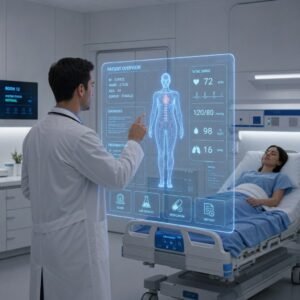
The Dawn of a New Era in Medical Technology
To truly appreciate the magnitude of the watson medical computer ishape partnership, we must first understand the individual powerhouses involved. Watson health solutions have long been pioneers in the medical AI space. Utilizing natural language processing and machine learning, Watson can digest millions of pages of medical literature, clinical trial data, and patient records in seconds.
On the other side of the equation is iShape, a leader in digital body mapping, 3D anatomical visualization, and spatial imaging. By bringing these two entities together, the medical community gains access to a unified platform that not only understands complex medical data but can visualize it in real-time, interactive 3D formats.
This healthcare technology partnership is not just a marginal upgrade; it represents a fundamental shift from reactive medicine to proactive, highly personalized care. It bridges the gap between abstract data and physical human anatomy, giving clinicians unprecedented insights into the human body.
AI-Driven Clinical Decision Support Systems: The New Standard of Care
One of the most immediate impacts of this collaboration is the evolution of AI-driven clinical decision support systems (CDSS). Historically, a CDSS relied on rigid, rule-based algorithms. Today, infused with cognitive computing, these systems actively learn, adapt, and provide nuanced recommendations based on an ever-expanding global medical database.
How Does Cognitive Computing Improve Diagnostic Accuracy?
A common question among healthcare administrators is: how does cognitive computing improve diagnostic accuracy in a practical setting? The answer lies in pattern recognition and data synthesis.
Human doctors, no matter how experienced, are susceptible to fatigue and cognitive biases. Cognitive computing systems, however, do not tire. They cross-reference a patient’s current symptoms, genetic markers, and historical data against millions of similar cases worldwide.
- Contextual Understanding: Unlike traditional search engines, cognitive computers understand the clinical context of a doctor’s notes.
- Evidence-Based Recommendations: The system ranks potential diagnoses by probability, providing peer-reviewed literature to back up each suggestion.
- Catching the Invisible: AI can identify subtle correlations between seemingly unrelated symptoms that a human might overlook.
By acting as a tireless second pair of eyes, these systems are fundamentally reducing diagnostic errors using cognitive algorithms, ensuring that patients receive accurate diagnoses faster than ever before.

Revolutionizing the Radiology Department
Nowhere is the impact of the watson medical computer ishape partnership more evident than in the radiology department. Medical imaging generates massive amounts of data, and radiologists are often overwhelmed by the sheer volume of scans they must review daily.
The Benefits of Integrating AI into Radiological Workflows
The benefits of integrating AI into radiological workflows are transformative. When Watson’s analytical prowess meets iShape’s visual clarity, the entire diagnostic pipeline is streamlined.
- Triage and Prioritization: The AI can pre-screen incoming scans, immediately flagging critical anomalies (like a brain bleed or a collapsed lung) and pushing those scans to the top of the radiologist’s queue.
- Enhanced Visualization: iShape technology allows standard 2D MRI or CT scans to be rendered into manipulate-able 3D models, giving radiologists a clearer understanding of spatial relationships within the body.
- Fatigue Reduction: By handling the tedious aspects of measuring and comparing historical scans, AI allows radiologists to focus on complex, high-level interpretation.
Automated Lesion Detection in Medical Imaging
A standout feature of this integrated technology is automated lesion detection in medical imaging. Finding a microscopic lung nodule or a tiny microcalcification in breast tissue is akin to finding a needle in a haystack.
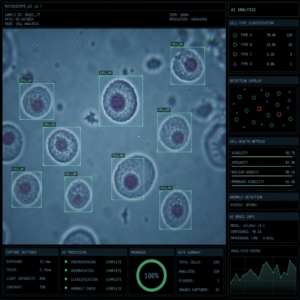
Through advanced neural networks trained on millions of annotated images, the system acts as an automated assistant. It places digital bounding boxes around suspicious areas, calculating the exact volume and density of a lesion. Furthermore, it tracks these metrics over time, instantly notifying the physician if a benign-looking nodule has grown at an alarming rate between annual checkups.
The Fight Against Oncology: Deep Learning and Early Detection
Cancer remains one of the most complex challenges in modern medicine. The key to improving survival rates has always been early detection, and this is where AI truly shines.
The role of deep learning in early cancer detection cannot be overstated. Deep learning algorithms, a subset of machine learning, excel at analyzing complex, unstructured data. In the context of the watson medical computer ishape partnership, these algorithms analyze tissue biopsies and cellular structures at a granular level.
For instance, in dermatology, the combination of iShape’s high-fidelity topical imaging and Watson’s deep learning algorithms can differentiate between a benign mole and early-stage melanoma with accuracy rates that often rival or exceed those of board-certified dermatologists. This early intervention is the difference between a simple outpatient procedure and a grueling course of chemotherapy.
From Data to Treatment: Machine Learning and Personalization
Diagnosis is only the first step; the subsequent challenge is determining the most effective course of action. This is where machine learning for personalized patient treatment plans takes center stage.
In the past, the “standard of care” was often a one-size-fits-all approach based on population averages. Today, cognitive systems analyze the unique biological makeup of the individual.
- Genomic Profiling: AI algorithms can cross-reference a patient’s genetic sequence with databases of known drug efficacies, predicting which chemotherapy agent will work best for a specific tumor mutation.
- Predictive Modeling: By analyzing historical data from patients with similar demographic and medical profiles, the system predicts how a patient will respond to a specific treatment, including potential side effects.
- Dynamic Adjustments: Treatment plans are not static. As the patient’s vitals and lab results are continuously fed into the system, the AI suggests real-time dosage adjustments.
Precision Healthcare Through Big Data Integration
This level of personalization is achieved by realizing precision healthcare through big data integration. Hospitals are treasure troves of siloed data—electronic health records (EHRs), wearable device outputs, lab results, and socioeconomic data.
The Watson-iShape ecosystem acts as a massive data funnel, harmonizing these disparate data streams into a single, cohesive patient narrative. By analyzing the “big picture,” healthcare providers can address root causes rather than just treating symptoms, leading to drastically improved long-term patient outcomes.
Elevating the Operating Room: 3D Imaging and Surgery
The integration of advanced cognitive computing with spatial mapping technology has profound implications for the surgical theater. Surgeons are leveraging this partnership for enhancing surgical outcomes with 3D imaging technology.
Pre-Operative Planning
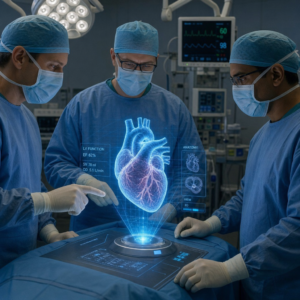
Before the first incision is made, surgeons can use iShape’s technology to generate a hyper-realistic, patient-specific 3D model of the target organ. Watson’s cognitive engine annotates this model, highlighting critical blood vessels, nerve bundles, and optimal incision pathways. Surgeons can literally “rehearse” a complex tumor resection in a virtual environment, minimizing surprises during the actual procedure.
Intraoperative Guidance
During surgery, this technology translates into augmented reality (AR) guidance. Real-time health data analysis and visualization allow the patient’s vital signs and the 3D anatomical map to be overlaid onto monitors—or even directly into a surgeon’s AR headset. If a surgeon is millimeter-close to a critical nerve, the system can provide real-time visual and auditory alerts, drastically reducing the risk of operative complications.
Comparing AI Medical Assistants to Traditional Software
To fully grasp the value of this partnership, we must engage in comparing AI medical assistants to traditional software.
Traditional medical software is generally heuristic—it relies on “if-then” programming. If blood pressure is over 140/90, then flag for hypertension. While useful, these systems are rigid. They cannot account for context, and they require continuous manual updates by programmers to stay current with medical guidelines.
Cognitive AI systems, like the Watson-iShape integration, represent a paradigm shift:
- Continuous Learning: They learn from every interaction. Every time a physician accepts or rejects an AI recommendation, the neural network adjusts its future parameters.
- Natural Language Processing (NLP): Traditional software requires data to be inputted in strict, structured drop-down menus. AI can read a doctor’s messy, dictated, free-text clinical notes and extract vital data seamlessly.
- Proactive vs. Reactive: Traditional software waits for a query. AI assistants proactively monitor a patient’s file and alert the care team before a critical event (like sepsis) occurs.
The Backbone of Innovation: Cloud Infrastructure
None of this processing power would be viable without robust infrastructure. The deployment of cloud-based cognitive platforms for healthcare providers is what makes the watson medical computer ishape partnership scalable and accessible.
In the past, running complex AI algorithms required hospitals to invest millions in on-premises supercomputers. Today, cloud architecture democratizes access to top-tier AI.
- Accessibility: A rural clinic can access the exact same diagnostic algorithms as a premier metropolitan research hospital.
- Seamless Updates: The AI models are continuously updated in the cloud, ensuring all users have instant access to the latest clinical guidelines and algorithmic improvements.
- Collaboration: Cloud platforms allow multidisciplinary teams (e.g., an oncologist in New York, a radiologist in London, and a surgeon in Tokyo) to view the same 3D iShape models and Watson analytics simultaneously in real-time.
Implementing the Future: Actionable Steps for Clinics
Reading about AI is one thing; bringing it into a medical practice is another. Many healthcare administrators wonder how to implement advanced analytics in clinics without disrupting daily operations. Here is a practical, step-by-step approach to integrating technologies like the Watson-iShape platform.
1. Assess Infrastructure and Data Readiness
Before integrating advanced AI, ensure your current EHR system is modernized. AI relies on data; if your clinic’s data is heavily siloed or still largely paper-based, the AI will not function effectively. Transition to a unified, cloud-ready EHR first.
2. Identify Clear Pain Points
Do not implement AI just for the sake of having AI. Identify specific bottlenecks in your clinic. Is your radiology department suffering from burnout? Start by implementing automated lesion detection. Are your surgical complication rates higher than average? Focus on 3D imaging for pre-op planning.
3. Pilot Programs and Phased Rollouts
Start small. Choose one department or one specific workflow for a 90-day pilot program. Allow your staff to get comfortable with the interface of the AI-driven clinical decision support systems before rolling it out hospital-wide.
4. Invest in Comprehensive Staff Training
The best AI in the world is useless if the medical staff doesn’t trust it or know how to use it. Frame the AI not as a replacement for doctors, but as an advanced tool—like a high-tech stethoscope. Provide hands-on training focusing on how the AI can reduce administrative burdens and improve patient face-time.
5. Establish Feedback Loops
Create a system where clinicians can easily report when the AI provides a brilliant insight, or conversely, when it makes an error. This feedback is critical for fine-tuning the cognitive algorithms to fit your clinic’s specific patient demographic.
Navigating the Ethical Landscape: Data Privacy
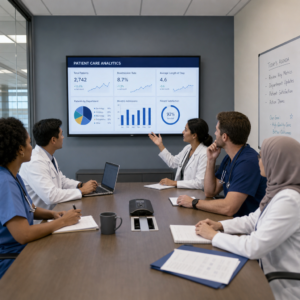
With great data comes great responsibility. A massive concern regarding the widespread adoption of these technologies is medical data privacy in cognitive computing systems.
To feed the algorithms of the watson medical computer ishape partnership, vast amounts of patient data are required. How do healthcare providers ensure compliance with stringent regulations like HIPAA (in the US) or GDPR (in Europe)?
- Data De-identification: Before patient data ever reaches the cognitive cloud, it undergoes rigorous anonymization. Names, addresses, and social security numbers are stripped away, leaving only the raw clinical data (e.g., age, symptoms, scan images).
- Federated Learning: This is a cutting-edge approach to AI training where the central algorithm is sent to the local hospital’s servers. The AI learns from the hospital’s local data, and then only the learnings (the algorithmic weight updates)—not the actual patient data—are sent back to the central cloud. This ensures sensitive data never leaves the hospital’s firewall.
- End-to-End Encryption: All data transmitted between the clinic, the iShape imaging tools, and the Watson cognitive cloud is secured using military-grade encryption protocols, safeguarding against cyber threats.
The Future of Human-AI Collaboration in Hospitals
As we look toward the horizon, it is clear that partnerships like this are not aimed at replacing medical professionals. The true future of human-AI collaboration in hospitals is symbiotic.
The concept of “Centaur Medicine”—a term borrowed from chess, where a human and an AI team up to beat either a solo human or a solo AI—is becoming the medical standard. The Watson medical computer excels at math, pattern recognition, and data recall. Human doctors excel at empathy, ethical judgment, and complex physical examinations.
When you combine Watson’s cognitive power, iShape’s visual modeling, and the irreplaceable human touch of a dedicated physician, the ultimate winner is the patient. We are moving toward a future where diagnostic errors are a rarity, treatment plans are precisely tailored to the individual’s DNA, and surgical outcomes are optimized through flawless 3D pre-planning.
Conclusion
The watson medical computer ishape partnership represents a watershed moment in healthcare technology. By seamlessly blending the analytical brilliance of Watson health solutions with the visual, spatial, and anatomical mastery of iShape, the medical community is being armed with tools previously relegated to the realm of science fiction.
From the profound benefits of integrating AI into radiological workflows and automated lesion detection, to the implementation of cloud-based cognitive platforms that bring big data to the bedside, this collaboration is setting a new benchmark for patient care. As clinics learn how to implement advanced analytics and navigate the nuances of medical data privacy, the path forward is clear.
The integration of artificial intelligence is no longer a futuristic luxury; it is becoming a clinical necessity. For healthcare providers, embracing this era of precision healthcare through big data integration and human-AI collaboration is the ultimate step toward saving lives, improving outcomes, and reshaping the future of medicine as we know it.